Speaking
Train the Mind
Like the Body
How Athletes Turn Mental Health Into a Performance Advantage for Sport and Life
Signature Keynote
Train the Mind Like the Body
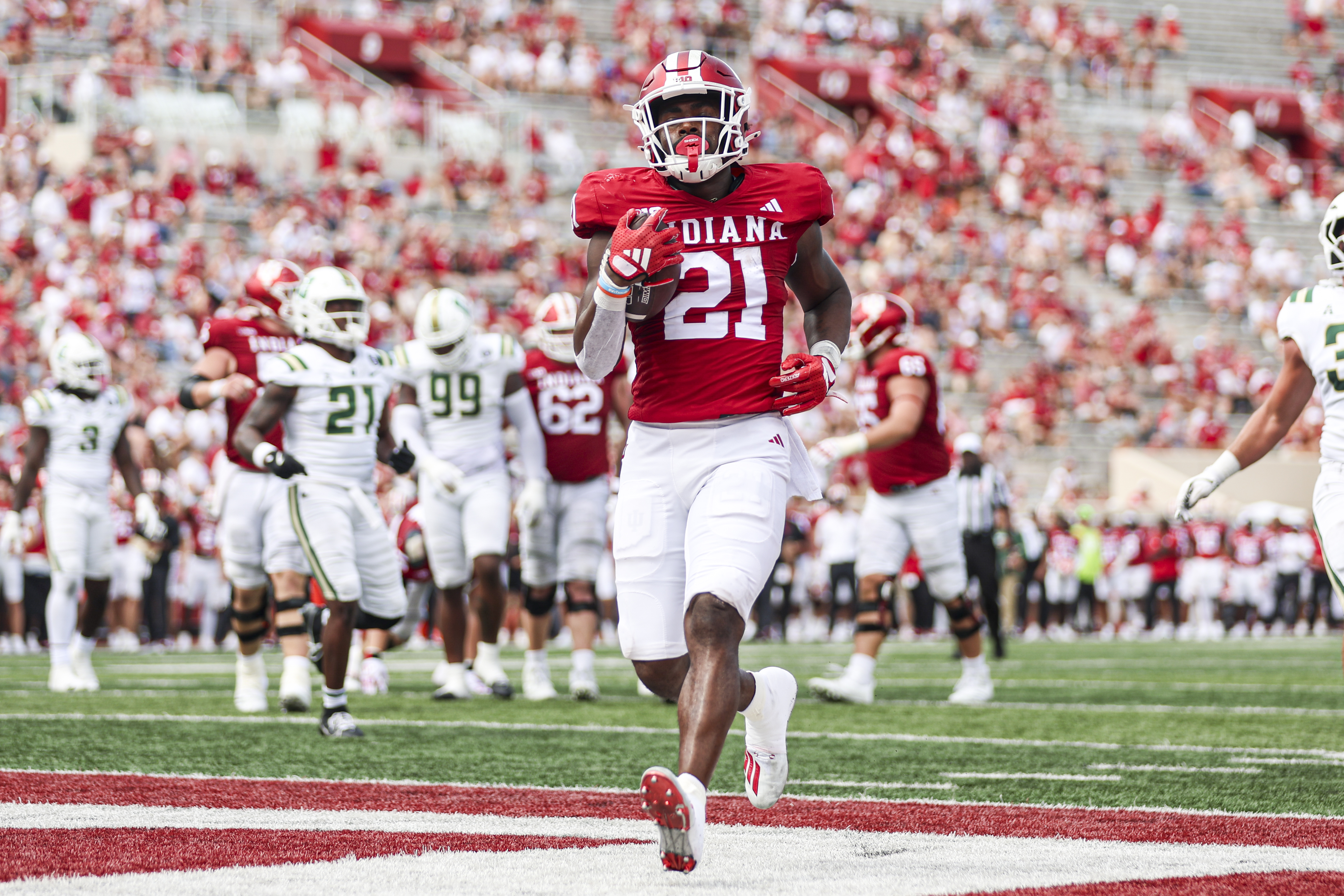
Elijah Green came into college in the best shape of his life — the size, the speed, the football IQ, everything a scouting report could measure. What no one put on that report, and what he didn't even know to look for in himself, was whether his mind was trained for the pressure that was coming.
In this keynote, Elijah takes audiences through the real story behind that gap: freshman year at the University of North Carolina, where he showed up to play running back having caught exactly one pass in his entire high school career, and spent months watching his hands turn to bricks the moment the lights came on. He walks through the anxiety he'd carried since childhood long before it ever had a name, the moment he finally sat down with a sports psychologist and learned real, usable mental tools, and the mistake he made next — believing that once he felt better, he was done, and could stop doing the work that got him there.
That mistake caught up with him the hardest way possible: the sudden loss of his cousin and best friend, Bryce, in the middle of a season where Elijah was fighting for a starting job. He shares, with real vulnerability, what it looked like to bury that grief and try to perform through it — and how doing so sent him right back down the depth chart, to the exact place he'd started from. It's the moment that finally taught him something he now believes without question: mental training isn't a one-time fix. It's maintenance, the same as anything else worth training.
Audiences leave this keynote having watched Elijah rebuild — not just as a story, but with the tools laid out step by step: regular counseling as the foundation, daily self-talk and affirmation practice, visualization, controlled breathing, and staying present under pressure. Elijah backs each one with real research, but grounds every single tool in exactly how he used it — including the thirty-plus affirmations he wrote on his own bathroom mirror and repeated every morning until they stopped feeling like a lie. He closes by walking audiences through the season that followed: reclaiming his starting job, nearly 700 total yards, nine touchdowns, an ACC Championship, and a trip to the Holiday Bowl — proof, in his words, that this isn't a nice idea. It's cause and effect.
What to Expect
Honest, Unflinching, Impactful
Audiences can expect a talk that is honest, sometimes funny, and unflinching about the hard parts — the drops, the grief, the fear of failure — before it turns practical and hopeful. Elijah doesn't just tell his story; he teaches. Every major turning point is paired with a specific, research-backed tool the audience can start using immediately, whether they're elite athletes or simply carrying pressure no one else can see. Expect real vulnerability, moments of humor, a room that goes quiet at the right times, and a close that leaves people with something concrete to act on — not just something to feel for an hour and forget. The central message is simple and stays with people long after they leave the room: we train our bodies every single day, but almost nobody teaches us to train our minds — and the two were never separate to begin with.
What Your Audience Takes Away
Key Takeaways
Mental health and performance are directly connected
You cannot separate how an athlete feels from how an athlete plays. Elijah proved this on the field, twice — once when he built the habit of mental training and thrived, and once when he let it go and watched his performance collapse as a direct result.
Mental skills are trained, not innate
Self-talk, composure, visualization, and confidence under pressure are not fixed traits you either have or don't. They are skills, built deliberately — the same way a jump shot or a 40-yard-dash time is built — through repetition, coaching, and daily practice.
Asking for help is strength, not weakness
Elijah shares candidly that walking into a counselor's office took more courage than anything he ever did on the football field — and that the version of himself who asked for help was always the stronger one.
Mental training is maintenance, not a one-time fix
Elijah thought he was "done" once he felt better and stopped using his tools — and paid for that mistake during the hardest season of his life. Mental health work doesn't end once you feel okay; it's an ongoing practice, like training in the weight room.
You don't have to wait for a crisis to start
Elijah closes by challenging every audience member — whether they're dealing with something serious right now or nothing at all — to start training their mind today, before life demands it of them.
Practical Tools
What Audiences Walk Away With
The Shift
A Changed Perspective on Mental Health
Audiences leave seeing mental health not as a sign of weakness, but as a tool to be developed — one that directly drives both athletic and life success. That shift in perspective is the foundation everything else is built on.
Take Them Home
Trainable Mental Skills
Counseling
The value of talking to someone regularly, before a crisis hits — not just after.
Self-talk & Affirmations
How to identify negative thought patterns and deliberately replace them, including Elijah's own practice of over thirty affirmations written on his bathroom mirror.
Visualization
Structured mental rehearsal that activates the same neural pathways as physical practice.
Controlled Breathing
Simple, science-backed techniques — like box breathing — used by athletes and elite performers to manage pressure in the moment.
Presence
Staying focused on the play in front of you instead of the mistake you haven't made yet.
Elijah Green x Dr. Heather Larkin
Collaborative Workshops
Audience-specific training for athletes, parents, coaches, and athletic directors \u2014 pairing an athlete who lived it with a licensed clinician who can teach it. Explore the full workshop catalog.
View WorkshopsBooking Formats
Bring Elijah
to Your Audience
Keynote / Assemblies
A full-group talk for student bodies, athletic departments, or conference audiences. Elijah delivers his signature keynote in a high-energy, story-driven format designed to shift how an entire community thinks about mental health.
Individual Team Sessions
A focused session for a specific team, tailored to their season, culture, and needs. These smaller, more intimate sessions create space for real conversation, vulnerability, and practical mental skills athletes can use immediately.
Workshops / Events
Deeper, interactive sessions — for coaches, staff, or leadership groups — that go beyond the keynote format into applied tools, discussion, and frameworks for building mentally healthy athletic cultures.
Combine Formats Into One Visit
Formats can be combined into a single visit — for example, an assembly keynote plus a team session or a staff workshop in one trip. Elijah works with each host to build the right combination for their audience, schedule, and budget.
Audiences
In the Room
Elijah Speaking








Ready to bring Elijah
to your stage?
Whether it's a single keynote or a full-day engagement, Elijah customizes every session for your athletes, coaches, and community.